The Good: Smith-Njigba (JSN) is an outstanding route runner and he gets open more with craft than raw talent – which is how I’d prefer it. He’s a pain in the ass for defenses when someone is assigned to covering him in space, and he gets those opportunities with regular slot alignments and pre-snap motions. He’s bendy and patient, which both help him in setting up DBs really well. JSN by no means is devoid of talent that leads to wins at the WR position; his footwork is impressive and you see it in his high-caliber releases. When the ball is in his hands, he’s feisty and slippery so he should provide value via YAC in the NFL. JSN is a physical competitor too. He consistently works back to the QB, and he’s a good blocker in the run game.
The Bad: Smith-Njigba doesn’t possess top-end speed – he’ll likely clock a 40 in the 4.6 range – and he’s not particularly explosive. JSN’s hands are fine but his catch radius is limited; QBs really need to put the ball on him. I was surprised to watch how JSN handled zone defenses in his game film; it was common for him to miss the softest spots of zones or run through them. I mentioned in the previous section that Smith-Njigba is good in YAC situations – and that’s true – but he isn’t the type to make a tackler miss in tight spots. It also needs to be mentioned that he missed the 2022 season almost entirely due to injury. Notre Dame clamped down on Smith-Njigba in OSU’s 2022 opener – the closest thing to a full game he played against a legit opponent last season.
The Bottom Line: Smith-Njigba is definitely going to be one of the tougher evaluations of this NFL Draft process. While I’d contend that the NFL Combine matters less for WRs than it does for most other positions, it matters nonetheless and it speaks volumes that JSN might be better off skipping certain drills. I’m also not sure how to measure his production. Like, he’s a former five-star recruit and has a season of 95 receptions/1,606 yards/9 TDs on the back of his football card. But two of his three college seasons were totally absent, and in that other season with the massive stats he lined up next to Garrett Wilson and Chris Olave with a potential first overall pick in CJ Stroud throwing the ball. Like I said, he’s confusing to evaluate. Still, if I had to wager I’d predict that JSN is ultimately the first WR drafted this year. That has plenty to do with the overall lackluster caliber of this WR class, but it’s also possible to see a Cooper Kupp-esque player in JSN. I personally wouldn’t go that far, but it only takes one team.
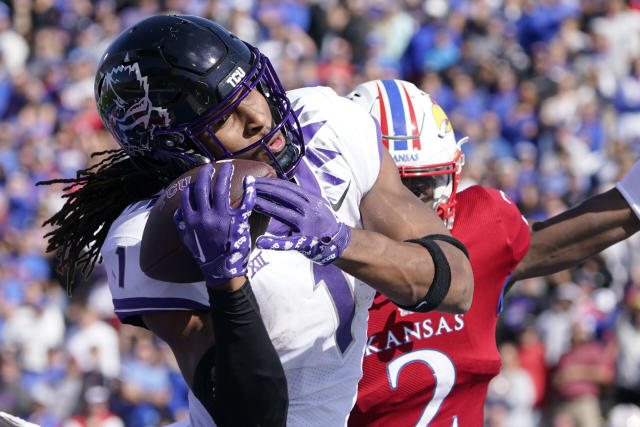
The Good: Johnston is one of the best recruits that TCU has landed in recent years, and it’s easy to see why. At 6’4”, 215lbs with a 40-yard dash that could clock beneath 4.40, Johnston is the total package of size and speed. He’s plenty physical and will likely be one of the top jumpers at the Combine, though Johnston isn’t another bulky cyborg receiver who can’t turn like DK Metcalf or Denzel Mims. He has impressive feet for his size and has high-quality releases all over on the field on his tape. Johnston could profile as a power slot WR, but he’s at his best lined up outside where he can blow by press coverage and work a tight sideline. Once the ball is in his hands, Johnston is a tackle breaker and YAC machine. He’ll continue to get a steady dose of screen passes in the NFL.
The Bad: Johnston’s hands are mediocre. There are enough drops on his tape to question his reliability, and even when Johnston does catch the ball it often doesn’t look as smooth as it should. He struggles to catch through contact too; he’s not the contested catch winner that you’d expect given his size. Johnston needs to improve at working towards the ball too, both when the ball is in the air and when plays break down to help out his QB. He too frequently lets the ball fall to him rather than high pointing it. Johnston is a good route runner, particularly on vertical routes, but his double moves will need to become more convincing to reach the next level as a deep threat. Once the ball is in his hands, Johnston can be lackadaisical with it; he had a costly fumble in the Big 12 Championship Game.
The Bottom Line: Even if this WR class is subpar compared to previous years, Johnston is a clear first round talent. His profile is too enticing and his production was plenty good enough to go along with it. His stats make him look like a one-year wonder, but that’s far from the truth. TCU was just that bad offensively until 2022. Despite reaching the National Championship Game this past season, the Horned Frogs still didn’t unleash Johnston to the degree that some other powerhouse programs would have. There is some blame there to assign to Johnston himself; he definitely can stand to be more consistent. If he remains this type of WR in the NFL – 60 receptions for over 1,000 yards with one of the highest yards per catch figures – then he’d be a valuable field-tilting weapon. But if Johnston cleans up the finer elements of his game, improves with field awareness and channels more of his general competitiveness into an alpha mentality, then he could become a legit WR1 in the league.
School: Virginia Tech (2019-2020), Tennessee (2021-2022)
Position: QB
Year: Redshirt Senior
The Good: In some years’ QB classes – including last year – Hooker would be the best pure thrower in the group. He’s very accurate with superb ball placement, and he throws to the intermediate areas of the field on a pretty line and the deep areas with proper loft. He might be the best deep passer in this Draft, and whoever drafts him will likely aim to take advantage of that skill right away. Hooker is just generally smooth and operates extremely quickly. He stands tall in the pocket, has a beautiful release, and by all accounts crushed his interviews at the Senior Bowl. He certainly has the look of a franchise quarterback.
The Bad: Part of Hooker’s look is that of a total statue in the pocket. There isn’t much pre-snap operation in his game right now and he can tend to lock onto his first read, so when defenses mess with that then Hooker has a tendency to freeze up. He’s mechanically dependent, which isn’t much of an issue when he has blocking in front of him and receivers getting open. It’s just one facet of many where Hooker lacks creativity though. Hooker needs his whole body to work in line to get enough juice on the ball, and he rarely completes passes whenever he breaks the pocket. Hooker ran with the ball a good amount in college but I don’t see that as much a part of his game in the NFL, especially after tearing his ACL. He obviously had a stellar final season at Tennessee, but his showdown against Georgia left a lot to be desired.
The Bottom Line: Josh Heupel has built an offensive juggernaut at Tennessee, which unfortunately does make it a bit harder to evaluate his players independent of the ideal surroundings. There are constantly guys wide open all over the field, and there are a good amount of snap throws built into the scheme that inflate stats as well. Still, I have some confidence that Hooker is independently a solid quarterback almost purely on the basis of his right arm. He wasn’t exactly a world beater at Tennessee like his numbers and record would indicate, and I don’t expect him to be one in the NFL either. But if a team is looking for a game-ready passer for its system – assuming Hooker is healthy by the start of the season – then he could be that guy. It could easily be construed as a negative that Hooker has already turned 25, but it feels like a case is emerging that seasoned QB prospects are better suited for rookie contracts than their younger counterparts. Hooker could make for an intriguing alternative to, say, signing Jimmy Garoppolo for any team picking near the bottom of Round 1 or top half of Round 2.
The Good: Jordan Addison definitely produced as well as any WR in this class during his college career, winning the Biletnikoff Award as a sophomore at Pitt before transferring to USC for a limited yet successful follow-up season as a junior. Addison is a good athlete; he’s a silky mover who often looks like he’s gliding, and he’s plenty elusive with the ball in his hands. He’s fluid too, whether he’s flipping his hips on a quick hitter or contorting his body while going up for a ball. He’s natural for the position, with good timing to highpoint balls and feel for soft spots of zone coverages. He can confuse DBs by adjusting his tempo on routes, leading to a bunch of his big plays on tape.
The Bad: Addison is 175lbs and plays like it, I’ll just put it that way. He has some rough tape dealing with press coverage and NFL DBs will certainly attack him at the line of scrimmage. He’s not even particularly quick off the line, and his releases on everything but go-balls are ordinary right now and even ugly on occasion. Addison is going to need to get more creative and nuanced to survive at the next level. Even once Addison gets into his route, he can struggle against tight man coverage. His speed certainly isn’t an issue but it’s not the top-end speed that you typically see for WRs of his weight entering the NFL. Just purely as a pass catcher, Addison has mostly reliable hands but they aren’t the strongest mitts, and he’s better at adjusting to off-target throws that sail high rather than anything wide or low. His tackle breaking ability and impact as a blocker are minimal.
The Bottom Line: Clearly, I have skepticism over Addison staying afloat at the next level. Honestly, I even feel like there’s an element of certainty that Addison will get bullied because we’ve already seen it happen to him lined up across from NFL quality cornerbacks, like Clark Phillips of Utah. There are certainly ways for teams to mitigate physical concerns over Addison; he’s capable of lining up outside and in the slot. Also, I’ve been wrong about lighter WRs before as the game continues to adapt in favor of offensive rules over defensive rules. Still, I’d be hard pressed to remember a less physical wideout who lists near the top of positional rankings. Stats are stats but it’s worth noting for a “production over tools” prospect like Addison that his numbers came out of two elite offenses with the nation’s best QB in each respective season. (And some of the DBs that he cooked, especially in the ACC, aren’t going to play on Sundays any time soon.) Remember the way some people talked about DeVonta Smith and his weight going into that Draft? That discourse is actually justified in the case of Addison this year.
The Good: Zach Charbonnet has the makings of a bell cow running back in the NFL, and not just because he’s 6’1”, 220lbs. Charbonnet is a downhill runner who hits the proper holes blocked in front of him at a nearly perfect rate. His vision is remarkably impressive, and that combined with his decisiveness leads to more big runs than you’d expect from a RB of Charbonnet’s profile. Charbonnet isn’t exactly a bruiser in the mold of Derrick Henry, but he is money in short yardage situations and can still wear out a defense over the course of a game. In the open field, Charbonnet displays excellent balance – both natural and upon contact – and his athleticism is underrated for his size. On zone runs, Charbonnet’s patience is on full display when he runs in unison with his blockers at the second level of a defense. He also might be the best pass protecting RB in this class; no blitzer is getting through him.
The Bad: My listed pros for Charbonnet far surpass the cons, but the main thing working against him is a key one: Charbonnet is not fast. If he runs a 4.55 40 at the Combine, he’ll probably be content with that. That isn’t a killer by any means; I’d actually contend that raw speed means less for RBs than it once did. Still, it reduces margin for error in the NFL. Like I wrote in the above section, Charbonnet is a good athlete but he definitely doesn’t move as well laterally as he does going north/south. He’s also somewhat clunky as a receiver. His hands aren’t bad and I thought he improved from his junior to senior year, but he’ll always be more of a pure runner than a dual threat.
The Bottom Line: Charbonnet is an exciting prospect because he’s that good of a runner. When a RB hits the Draft who’s as physical, naturally gifted AND smart as Charbonnet, he usually pans out at the next level. He just gets the ins and outs of playing running back beyond the required athleticism to do it. It’s worth noting that Charbonnet excelled as a senior in an offense run by Chip Kelly with a great offensive line in front of him but…1) Charbonnet would have been a fairly high pick had he declared last year… 2) he did improve from his junior to senior year like you’d expect… 3) he averaged at least 5.0 yards per carry in all 10 games last season. Regardless of your surroundings, that doesn’t happen unless you know what you’re doing carrying the rock. I don’t know if he’ll keep up that trend in the NFL, but Charbonnet is a Day 1 starter as a rookie and has a high floor to go along with a high ceiling.
The Good: Gibbs is exceptionally quick; that’s the bread-and-butter of his game. His jukes are straight out of Madden, and he’ll have above average speed for the NFL too. Gibbs will immediately become one of the best receiving backs in the league once he signs his first contract. I try not to harp too much on pass catching when it comes to RB evaluation, but it’s a real strength for Gibbs. He’s a dynamic route runner who’s practically unrecoverable in man coverage out of the backfield, and he can line up anywhere. Gibbs is a good team player on offense too, whether in pass protection or working to get open after the play breaks down.
The Bad: I flat out don’t view Gibbs as a very good runner. He certainly isn’t cut out to run between the tackles in the NFL, and I’d like to imagine even Gibbs’ biggest supporters would agree with that assessment. His vision is narrow and Gibbs struggles to get through holes cleanly when he does find them. He too often runs without a plan and there are too many negative runs on his tape due to hesitation upon receiving the ball or happy feet in the backfield. Gibbs is on the lighter side and his frame looks mostly filled out, so I don’t expect him to run through many tackles in the NFL. He’s relatively easy to bring down right now and he takes way too many shots; Gibbs needs to learn to contort his body to both avoid contact and brace for it. He’s also a one speed runner, so you’ll see him slip on tape when he tries to change up his tempo.
The Bottom Line: I alluded to it earlier, but my grading of running backs is heavily weighted in running ability and all of the other stuff is secondary. Naturally, I’m lower on Gibbs than the consensus. He can certainly become a weapon for an offense in the NFL, and he has his fair share of explosive plays on tape. He is somewhat of a one-year wonder though, and he did it behind an Alabama offensive line that had mile-wide lanes carved out on some of his longest runs. Gibbs’ future is certainly as the shiftier half of a running back duo, and even then I’m skeptical that he’ll withstand 10 carries per game from both efficiency and physical standpoints. It’s possible that his game evolves and he becomes a Tony Pollard type but…1) I’d say that’s like a 90th percentile outcome for Gibbs and 2) I like Pollard a lot, but I don’t even know if he was a first round player.
My first version of this ‘QB Carousel’ exercise debuted not too long ago, just earlier this month. Still, now we know that Kansas City and Philly are playing in the Super Bowl, the NFL Draft order is taking its final shape, and some new GMs and coaches have been hired. But more than that…I’m just getting antsy to do this again before the first shoe drops in QB offseason movement.
This will be more fun if the categories remain the same over time. That means The Locks come first, and naturally given that they are locks…nothing has changed here.
Bengals: Joe Burrow
Bills: Josh Allen
Broncos: Russell Wilson
Browns: Deshaun Watson*
Chargers: Justin Herbert
Chiefs: Patrick Mahomes
Cowboys: Dak Prescott
Eagles: Jalen Hurts
Jaguars: Trevor Lawrence
Rams: Matt Stafford
Steelers: Kenny Pickett
Vikings: Kirk Cousins
Next up is Expect the Same. Two changes from last time at the end!
49ers: Trey Lance/Brock Purdy – Not going to lie, I had an entire thing written about Tom Brady finishing his career in San Francisco, Brock Purdy backing him up, and Trey Lance getting traded to the Vikings. Then Brady announced his retirement “for good,” which legitimately shocked me. So it will be Lance and Purdy for the Niners, and I definitely expect Lance to be the guy between the two. Here’s a cut-and-paste job from that since-deleted paragraph on trading Lance: Lance is reportedly on track for 100% health by OTAs and is still 22 years old, and let’s not forget that the 49ers didn’t exactly shock the world by taking Lance with the third overall pick. He was a bona fide stud prospect – one that ranked No. 5 on my Big Board for that year – and could have been QB1 in other draft classes. I’d be hard pressed to remember another young NFL player who did less to deserve a reputation as damaged goods; he sat out his rookie season then shattered his leg in the second game of the following season. This isn’t Zach Wilson completing 55% of his passes across 22 starts. Hell, I think Justin Fields’ 2022 performance is damn near the lowest bar that we should expect Lance to clear in his debut season. I don’t know if Lance will crack 1,000 yards rushing, but he’s still an incredible runner and was projected as a better pocket passer than Fields – if, ya know, Lance literally being drafted ahead of Fields didn’t make that clear.
Bears: Justin Fields – Speaking of Fields…I still don’t believe that Chicago considers QB with this pick nor do I believe that they successfully trade out of it – especially with multiple high-end QB prospects available in this class.
Dolphins: Tua Tagovailoa – Chris Grier and Mike McDaniel are adamant that Tua is their 2023 QB, even though he is still in concussion protocol. And I believe them. Barring further medical developments, a clear and immediate upgrade at QB doesn’t exist for the Dolphins offense. Note: I’d like to see Miami add Matt Ryan as Tua’s insurance policy.
Lions: Jared Goff – Goff will be the Week 1 starter for the Lions, though I still view Detroit as the favorite to land Bryce Young. I don’t expect Young to be the cup of tea for all GMs around the league – including Nick Caserio in Houston. In that event, a Draft Day trade between Arizona at 3 and Detroit at 6 would be mutually beneficial. The Cardinals need all of the rebuild ammo they can get with a huge undertaking ahead for new GM Monti Ossenfort, and moving up only 3 spots would allow the Lions to finally cash in on the Matthew Stafford trade while still holding onto enough draft capital to address the rest of the roster.
Ravens: Lamar Jackson – No change here; the Ravens will hit Jackson with the exclusive franchise tag, costing them about $45mil for 2023.
Seahawks: Geno Smith – A 2-3 year deal between Geno and Seattle should be one of the first dominoes to fall this offseason. Negotiations should be pretty easy.
Giants: Daniel Jones – And here we go! This is an update from the first version, as I predicted the Giants would negotiate with Jones on the open market and lose him to Carolina in the process. But Joe Schoen and Brian Daboll were adamant in their end-of-season press conference that DJ is part of their vision for the immediate future of the Giants, and they basically admitted that they will franchise tag him if it comes down to that. I was a bit surprised by this development, as I thought the team viewed Jones and Saquon Barkley in equal regards of importance to the offense and therefore would tag Saquon for $10mil over Danny for $32mil, but apparently that’s not the case.
On an anecdotal level as a Giants fan, I probably would have preferred the latter path but I’m fine with the team tagging Jones instead. They have the cap space and the desire for continuity under center makes sense. Also on the subject, I’m skeptical that the two sides will iron out an extension before the season. DJ’s camp is likely pricing him as an upper echelon QB and, while the front office can like him all they want, I doubt they view him that way.
Patriots: Mac Jones – Following the hire of Bill O’Brien as offensive coordinator and even preceding Tom Brady’s retirement news, I pivoted to the Pats sticking with Mac. Brady has his own connection to O’Brien and Robert Kraft would likely drop everything for Brady if he expressed a desire to come out of retirement and return to the Patriots, but the O’Brien move is essentially an admission that the team failed Mac Jones in his second season. Anybody would be better suited to call an offense over the Matt Patricia & Joe Judge pairing, but choosing Mac’s college playcaller is a personal touch.
The Big Fish are the same QBs, minus Tom Brady. But all of their destinations have changed!
Raiders: Aaron Rodgers – I’ll start with this: Aaron Rodgers will be traded. That’s not a prediction; it’s a statement. I’m that confident, for reasons including financials, rebuilding, ego (of both Rodgers and Matt LaFleur), and more. It might be harder to believe that Packers would move on from their Super Bowl champion, multiple-MVP franchise QB for an unproven fourth-year QB if the organization hadn’t literally moved on from their Super Bowl champion, multiple-MVP franchise QB for an unproven fourth-year QB 15 years ago to give Rodgers the job in the first place. Like I wrote about in detail in the previous piece too, this trade will almost certainly transpire (officially) after June 1 to make it feasible on Green Bay for salary cap purposes. I’m sure Green Bay – and certainly Jordan Love – would rather move Rodgers earlier to recoup draft capital in the 2023 Draft, but trading Rodgers before June 1 would require the Packers to max restructure with void years basically all eligible players, and even THAT would leave them with barely any financial breathing room to operate over the season. I don’t envision a world where the Packers, usually among the league’s more conservative front offices prior to the all-in push of the past couple of years, follow the Saints model of team construction.
Previously I had the Giants trading for Rodgers, but I’ve changed course following their endorsement of Daniel Jones and Green Bay’s declaration that they would only trade Rodgers to an AFC team. The Raiders are an obvious fit with Derek Carr on the way out and Davante Adams there, and the money should be no issue. Rodgers technically doesn’t have a say in where he’s traded but he could credibly threaten retirement if he’s not happy with it; I think he’d be fine with Vegas though. In addition to Adams, the Raiders have other good pieces in place on offense with Josh Jacobs, Hunter Renfrow, and Kolton Miller. They have the 7th overall pick in the Draft and plenty of cap space to bolster the rest of the roster. Vegas could also conceivably re-sign Jarrett Stidham as their “Rodgers insurance” temporary QB1 following his somewhat impressive two-game stint as the Raiders’ starter to close the season. If you noticed that I left out Darren Waller from the above list of weapons on the Raiders, that wasn’t an accident. I’m pretty sure they are going to trade him, and Green Bay would be an excellent fit. We’ll call it 2024 Round 1 + 2025 Round 2 + Waller for Rodgers.
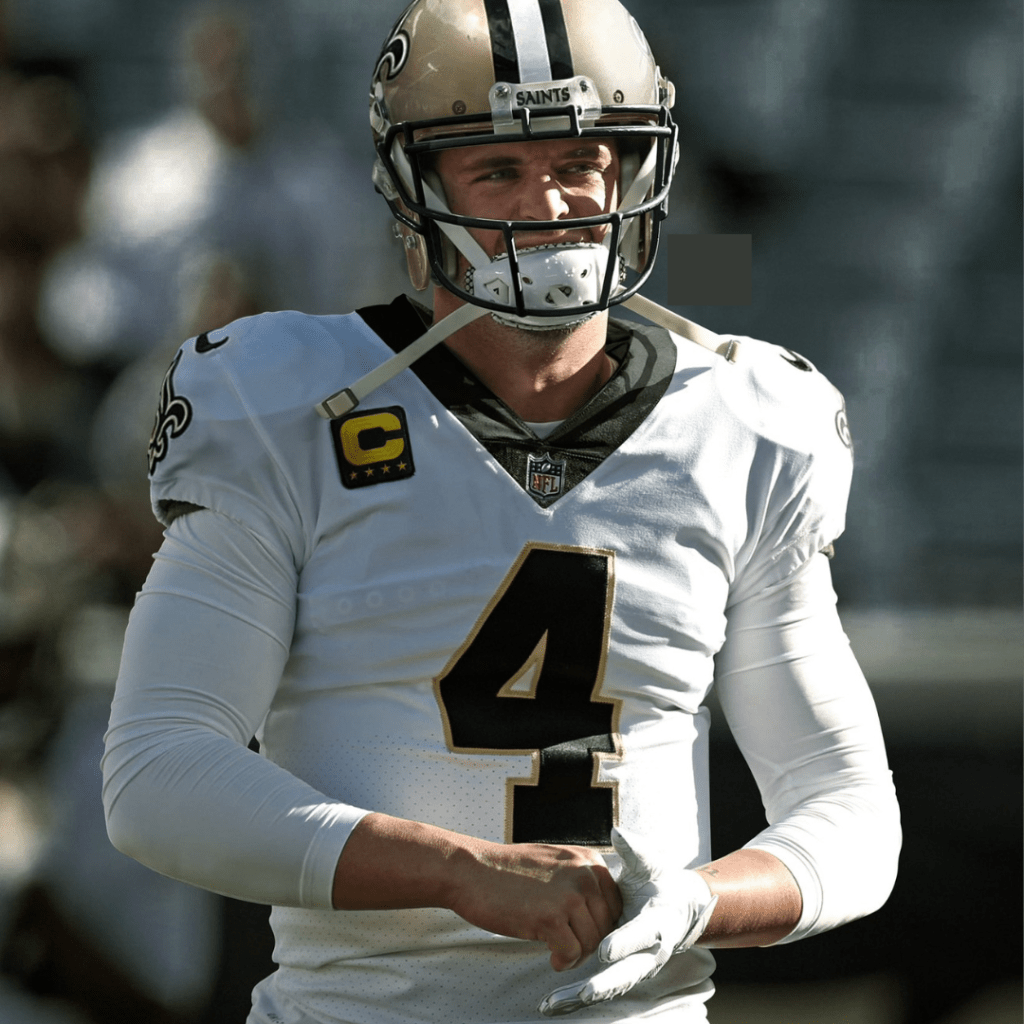
Saints: Derek Carr – When outlining this go-around of this exercise, I had Carr ending up with the Jets. (Which is still totally possible!) I had 31 teams figured out with the Saints being the lone outlier; in the original version, I had them leveraging Sean Payton to get up to the 3rd overall pick in a trade with the Cardinals, but that obviously didn’t come to fruition. They did use Payton to get back into the first round and should definitely now be on radar as candidates to trade up for a QB; the Saints are agents of chaos in the Draft. Still, trading to the upper half of Round 1 from Pick 29 would require a package that rivals what the 49ers gave up for Trey Lance (two future 1sts and a 3rd) just for the Saints to get QB3 or QB4 on the board. Honestly, considering the cost of first-round picks and how dour the Saints’ salary cap situation remains, I actually might endorse that strategy. But I don’t think that’s what they’re going to do. I don’t expect Mickey Loomis to exit win-now mode until things completely collapse for the Saints. Carr’s current contract is also structured exactly how the Saints like to structure contracts, with massive annual base salaries offset by minimal bonus figures. Upon receiving Carr, the Saints could restructure his contract and reduce his 2023 cap hit to as low as $10mil.
The more I think about the QB landscape, the more I buy that Carr will be traded, not released, within the next two weeks. Too many teams are just too desperate for a good QB, especially one who can step in and win right away. Carr should be more than fine with the Saints’ roster. They don’t have anything at WR outside of Chris Olave right now, but they have a great offensive line and defense, so with Carr in the picture they’d likely be considered the favorites to win the NFC South next season. Trading for Carr will cost less than it normally would for a QB with his resume since the Raiders are openly moving on from him one way or another, but considering that other teams – like the Jets – will likely compete for him too, I could see it costing New Orleans their Round 2 pick. Or perhaps a later pick plus a player, like Cesar Ruiz.
Titans: Jimmy Garoppolo – Last time, I had the Titans giving Malik Willis a shot at winning the starting job while bringing in someone like Gardner Minshew to push him in camp. I didn’t plan to change that, but the more I thought about it and read into it…Mike Vrabel isn’t pressing any reset button. Vrabel and Titans ownership pulled a Red Wedding on Jon Robinson; he was unexpectedly fired midseason following six seasons as GM. So yeah…don’t expect another teardown move like the AJ Brown trade any time soon in Nashville. Behind Vrabel and new GM Ran Carthon, they should pursue a veteran QB to lead them into the next chapter of Titans football. Enter Jimmy G, who Carthon knows well from San Francisco. One of Carthon’s first moves as Director of Pro Personnel for the 49ers was their trade for Garoppolo, and then Carthon again chose Garoppolo over all other free agent options as Trey Lance’s backup going into 2022. The point is, he likes him, and I bet Vrabel does too. Tennessee’s salary cap situation isn’t great and Jimmy G won’t come cheaply, but they can make it work with a low Year 1 cap hit and roster cuts elsewhere. Garoppolo might field similar or even higher offers from other teams, but I bet after years of instability he’d buy into Vrabel and Carthon’s vision with him at the center of it all.
An exciting change since the first version of this piece is that I’ve evaluated the primary QB prospects in the upcoming NFL Draft, so now there’s more color to The Lottery Picks.
Note:If you happened to skim to this part, I mocked Bryce Young to Detroit earlier.
Colts: CJ Stroud (NFL Draft Profile) – I am extremely high on Stroud; he’s definitely my QB1 and there’s even a chance that he lands atop my overall big board. I have a hunch that Chris Ballard feels the same way. Here is what he said back in 2020 when asked about the traits he looks for in a QB:
“Accuracy, No. 1.”
“Mental aptitude.”
“I don’t think it is talked about enough, but a fit with what you’re trying to do schematically, offensively, is critically important.”
“I’ve always said they’ve got to have enough escapability, enough feet and accuracy. Those are things you just can’t teach. It’s hard to (find) accuracy. Can you get a little better? Can you get it dramatically better? No.”
I’d concede that Bryce Young also matches that description, but this is the same Chris Ballard who usually drafts freaky players and hopes they learn how to play the position later. Young is like 5’11”, 190lbs; Stroud is 6’3”, 220lbs. (Young is also already picked in this scenario.) The Colts have a ton of work to do, and they’d be blessed to land Stroud and then focus on fixing everything around him.
Panthers: Will Levis (NFL Draft Profile) – Ironically enough, Frank Reich, Carolina’s new Head Coach, was asked the same question on QB traits given that he and Ballard were partnered in Indianapolis at this time; here’s how he responded:
“Toughness — mental and physical toughness.”
“Accelerated vision. That’s my word(ing) for: How fast do you think on your feet?”
“Accuracy. You have to be really accurate in this league. The windows are small.”
“You have to look for the feet. Most sports are played from the ground up. So as a quarterback, that’s really important, how you play with your feet.”
“Intangibles. The leadership. Are you a playmaker in big moments?”
There’s enough of a difference between the two sets of answers that it’s probably fair to surmise that Phil Rivers and Matt Ryan were Ballard’s guys in Indy while Carson Wentz and Sam Ehlinger were Reich’s guys. Will Levis is much more the latter type, a bruising runner and certified tough guy who will get praised for his intangibles over the next three months. Levis’ game has its faults – his feet notably suck right now – but he’s proven that he can operate quickly and Reich has a good reputation of coaching up young QBs.
Jets: Anthony Richardson (NFL Draft Profile) – There might be a feeling of disappointment for fans if the Jets, whose roster is in its best shape in years, struck out during the early wave of veteran QB moves. But honestly, rushing or bending over backwards to acquire a well-known commodity at QB can end in disaster, and the Jets’ roster isn’t THAT good yet. I understand the desperation but they should continue to trust the process, especially following a 2022 draft class that looks like a total home run for the Jets. I like Richardson’s game much more than I expected going into his evaluation. Like I wrote in his profile linked above, I don’t think he’s as far away from readiness for NFL action as others are saying, but it could work out well for the Jets to bring back the internally popular Mike White while Richardson finds his footing in the league. Once Richardson is in charge, the Jets could unleash the downhill, physical offense that Joe Douglas has been building towards all along.
An added benefit of this approach is that the Jets could plan to draft a QB but then change course for Aaron Rodgers if they are all snatched up by the time they’re on the clock. If it came down to that, Woody Johnson would not be topped in a trading duel with the Raiders.
Most of The Stopgaps haven’t changed, with only one exception at the tail end of this section.
Buccaneers: Sam Darnold – I’m fascinated to see how the Bucs go about this offseason. Their cap situation is brutal, for good reason though after going all-in with Tom Brady. They either proceed with a hard rebuild, which would look like Kyle Trask at QB and trades of multiple star players; Tampa could land a Round 1 pick for Chris Godwin if they wanted to. I think they’ll go the path of a soft rebuild though, still with a few notable trades and cuts but extensions and restructures for other key players, like Godwin. In that outcome, they’ll need a QB with even an ounce of promise. It wouldn’t be the most shocking outcome if Sam Darnold had a late bloomer season like Geno Smith did in 2022. At the same time, if he had a season more like Mitch Trubisky in 2022 that wouldn’t be much of a surprise either.
Cardinals: Baker Mayfield/Kyler Murray – Technically I edited this; Baker Mayfield is swapped in for Teddy Bridgewater now that Sean Payton isn’t headed to Arizona. But it’s the same idea of a low upside QB who views himself as a starter filling in for Kyler Murray while he recovers from injury.
Commanders: Sam Howell/Taylor Heinicke – No change here.
Falcons: Ryan Tannehill/Desmond Ridder – In keeping with the idea that Mike Vrabel will refuse to preside over a total rebuild, I suppose it’s possible that Tennessee just holds onto Tannehill for the final year of his contract. I’m doubtful though; as much as Vrabel might support Tannehill, trading him will nearly get the Titans out of the negative of cap space on its own. With a new-look front office, I think calmer heads will prevail and Tennessee will bid farewell to Tannehill – especially if a team like Atlanta takes on his salary in full.
Packers: Jordan Love – No change here. I am really curious how Green Bay handles the QB2 position if once Rodgers is traded, given how unknown of a commodity Love remains. This could be where Zach Wilson’s second chance takes place, especially since it’s a guarantee he’d get dealt if the Jets draft another QB. Honestly, he’s probably getting traded anyway this offseason.
Texans: Jacoby Brissett – Talk about an underwhelming name to end this! That’s probably too mean to Brissett, who legitimately played admirably in Cleveland last season while Deshaun Watson served his suspension. In the EPA (expected points added) + CPOE (completion percentage over expectation) composite stat, Brissett finished 11th in the league in 2022, right ahead of Daniel Jones, Lamar Jackson, Justin Herbert and Tom Brady. Now, I’m certainly not suggesting that Brissett belongs in the conversation with those other QBs, but the point is that going into 2023 with him atop a depth chart isn’t exactly waving a white flag. More about the Texans, I maintain my strong conviction that they bypass a first round quarterback in the Draft. I felt that way before they hired DeMeco Ryans, and I certainly feel that way now that they have hired Ryans. Even if Houston fans have already endured the final Bill O’Brien years and single years under David Culley and Lovie Smith, their climb out of the gutter of the league is only beginning now. I understand that he hasn’t had a ton to work with and that the Texans became a laughingstock before he was brought in, but Nick Caserio deserves criticism for how far away this roster remains even from competency. They need many more building blocks in place before placing the cherry of quarterback on top, and either Jalen Carter or Will Anderson will be a perfect place to start.
Thank you, as always, for reading! Follow on Twitter @Real_Peej
The Good: Bijan Robinson has the start-and-stop ability of a 120 pound man, let alone a 220 pound man. His cutting is truly second-to-none among RB prospects that I’ve evaluated over the past few years, and his balance is nearly as special too. Bijan can get remarkably skinny for a back of his size and he can maintain near top speed while angling his body to hit a hole or make defenders miss. Those elements of his game, plus his ability to hit top speed in a second, make Bijan an ideal fit for a zone scheme where he can patiently seek his first cut and get to the next levels of defenses. He has a full arsenal of moves in the open field that includes a tight spin, and he’s got plenty of leg strength to carry defenders and deflect anyone who tries to tackle him low. As a receiver, Bijan has really smooth hands and the body control of a natural WR. He accumulated 600 career touches at Texas and has the build to maintain a full workload in the NFL too.
The Bad: Bijan’s vision certainly isn’t an issue compared to most other NFL hopefuls at RB, but he’s unique in that he’s almost too overactive in scanning the field then reacting accordingly. He can stand to improve in trusting his blockers and allowing things to develop in front of him. There are plenty of examples on tape where Bijan curtails a developing run to cut back, often into the muck between the tackles. You also find moments on tape where Bijan hesitates in the backfield and passes up gaps that could be hit with urgency upon receiving the ball. He’ll even bypass fairly obvious opportunities to bounce runs at times, which is normally a *good* habit but admittedly frustrating for a RB with his talent. Bijan was surprisingly ineffective in short yardage and goal line situations at Texas; maybe that had something to do with apprehension for pre-draft injuries – which would be valid – but nonetheless it’s something to keep an eye on in the NFL. Outside of the run game, Bijan’s route tree doesn’t exist too far outside of wheels and screens. He’s also generally inconsistent with technique and subpar with recognition in pass protection.
The Bottom Line: Rather than a grand statement on the value of running backs or something along those lines, I’d rather write here about a lesson learned in NFL Draft evaluation and how it applies to Bijan Robinson. One of my worst misses was a relatively low grade on Micah Parsons; I loved his burst and tenacity but had concerns about his discipline and other factors that go into being a successful off-ball linebacker. I didn’t think big enough about how an NFL team could leverage his traits compared to how Penn State did. There are similar outcomes on the contrary too, like with Isaiah Simmons in Arizona. The point is that I could zero in on the potential shortcomings in Bijan’s game and worry what his career will look like if he’s drafted into a situation where his team prioritizes maximizing his touches over offensive efficiency, like with Saquon Barkley or Najee Harris. I’m not going to outright ignore that possibility or his weaknesses – and thus his below grade reflects that – but I will allow myself to get more excited about Bijan’s skillset ending up in the right situation than I had before.
The Good: Someone who knows the bare minimum about football can take one look at Anthony Richardson and say, “yup.” That’s how much Richardson looks the part, and his physical running style matches his size. Richardson is a true dual-threat QB; he’ll immediately become one of the league’s more lethal runners at the position and he can hum a 101 MPH fastball with such a quick release. He’s got the full package of mobility: scrambling, play extension, evading sacks, and throwing on rollouts. I was pleasantly surprised by Richardson’s intangibles given his “project” label. He’s willing to stand tall in the pocket, has a good sense of timing, and is smooth when given plays to work through progressions. He rarely puts the ball in harm’s way too, whether that’s because he throws the ball away or takes off running. When things are going right for Richardson – which isn’t that uncommon on tape – he has the look of the first overall pick.
The Bad: That said, I wouldn’t endorse taking Richardson with the first overall pick. I write it annually around this time of year that “raw” is my least favorite adjective to describe prospects, but it’s valid in Richardson’s case. He’s young, both literally at 21 years old on Draft Day and figuratively with only one season as a full-time college starter. You can tell that he’s green when he misses open throws, goes overboard with velocity, and struggles throwing to certain areas of the field; I think that could all sort itself out just with more reps. There are parts of his game that will require improvement with more than just patience. His mechanics are inconsistent; Richardson will unnecessarily drop his arm slot and lose accuracy – and he’s not particularly accurate to begin with. His pocket management needs work too, which is my biggest concern with Richardson as I continue to prioritize that skill more and more in my QB evaluation. He currently doesn’t do his offensive line many favors, as Richardson will routinely settle in unfavorable spots in the pocket, bail when he should step up and vice versa, and hold onto the ball when there is a hot read. Lastly, while I push back on this becoming a barometer of NFL readiness, Richardson didn’t give Florida much of a chance vs. Georgia in 2022 while CJ Stroud, Will Levis, and Bryce Young (twice) each handled themselves well against the Bulldogs.
The Bottom Line: I’m definitely a fan of Richardson, which candidly I didn’t expect given my general outlook on quarterbacks and the way that the Draft community is talking about him. Context is important for every prospect, and I think it’s especially important in Richardson’s case. I hated Florida’s scheme and playcalling in 2022, with Billy Napier and Rob Sale (offensive line coach of 2021 Giants) taking over from Dan Mullen. Their WRs were also mediocre and Richardson faced constant pressure around his tackles, which he was constantly sent into by the playcalls. I’m not totally excusing his 53.8% completion percentage, but Richardson really didn’t get much help. I don’t expect Richardson to ever contend for the completion percentage title in the NFL, but he should settle closer to 60% and, honestly, the frequency that he connects on splash plays make the incompletions worth it. I won’t be upset if Richardson begins 2023 as a backup, but I think he’d more capably survive as a rookie starter than others seem to think. Depending where he and others land in the Draft, I could see myself having some action on Richardson as a dark horse Rookie of the Year winner. His ability is truly special and I think his platform for archetypal QB play is high enough to justify an early gamble in the draft.





 Epiblogue